Choosing the Right Fuel for Searing and Outdoor Grilling
 Jordan HaleStaff Writer
August 3, 2026. Choosing between gas types is the fundamental decision for any backyard chef looking to master the art of the sear. This analysis provides a technical and practical breakdown for home cooks and pitmasters weighing the merits of different thermal outputs.
The Thermal Limits of Modern Kitchen Tools
Standing over a dry-aged ribeye that has spent four hours in a water bath, I realized that the delicate hiss of my old pastry torch wasn't going to cut it. There is a specific, visceral frustration in watching a beautiful piece of meat turn grey under a weak flame rather than developing that deep, mahogany crust. According to Serious Eats, butane torches are generally smaller and less powerful than propane torches, which require a larger canister to operate effectively. This power gap is not just about speed; it is about the chemistry of the Maillard reaction. Butane has a boiling point of approximately 28°F, which makes it temperamental in the very outdoor environments where most heavy searing happens. When the ambient temperature drops, the pressure in a butane canister often fails, leaving you with a sputtering flame that barely melts sugar, let alone chars a steak. Modernist Cuisine notes that while propane and butane are both safe for food, the efficiency of the burn and the risk of "torch taste"—the unburnt hydrocarbons left on food—often come down to how complete the combustion is. A weaker flame that struggles to stay lit in a breeze is far more likely to leave behind those unpleasant chemical notes than a high-velocity propane flame.
Power and Portability in the Field
Photo by ArtHouse Studio on Pexels
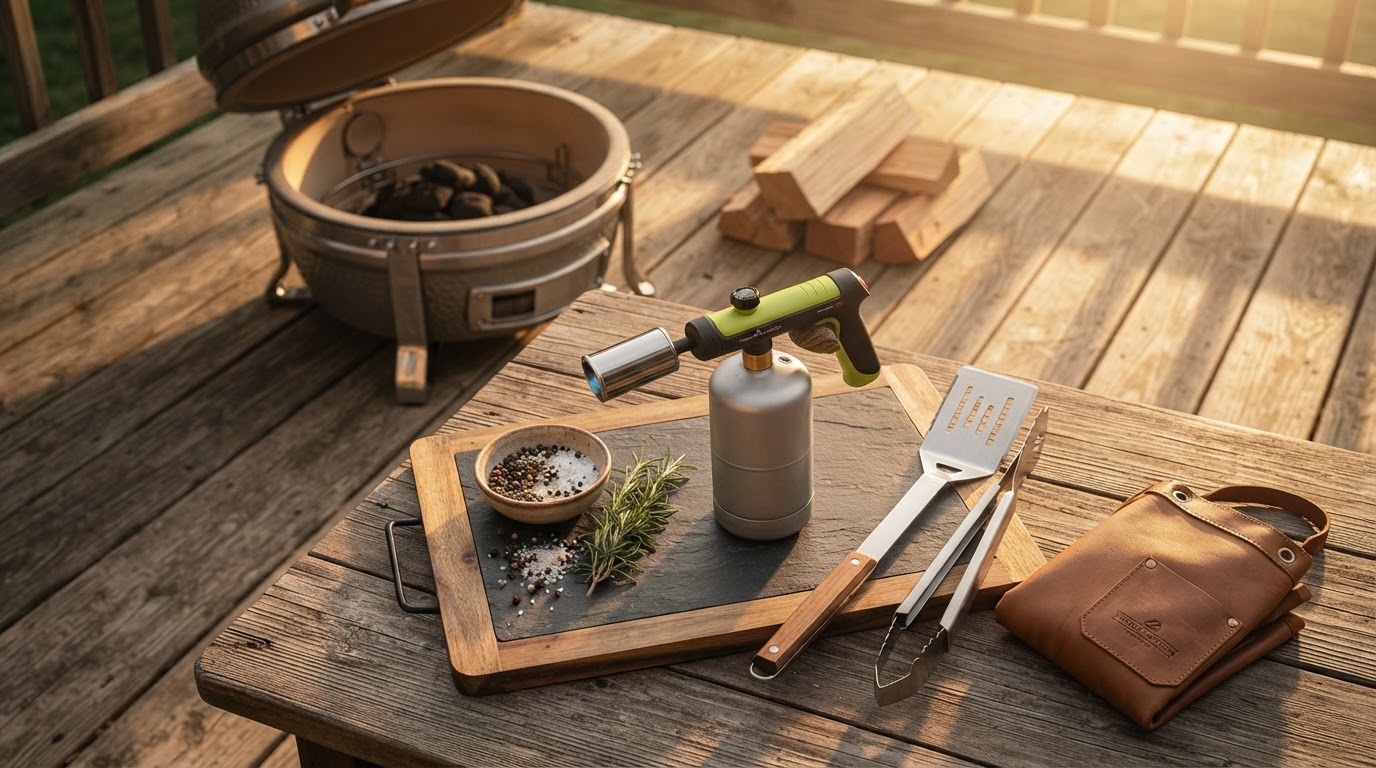
Somewhere around week two of using the Adjustable Propane Cooking Flame Torch For BBQ And Outdoor Cooking, I realized I had stopped reaching for my charcoal chimney starter entirely. The first thing I noticed was the sheer weight and balance of the unit when attached to a standard 1lb propane tank. Unlike the flimsy plastic housings of butane models, this tool is built for the rigors of a high-heat environment. Propane (C3H8) boasts a boiling point of -43°F, allowing it to remain liquid and pressurized in conditions that would render a butane torch useless. This makes the Adjustable Propane Cooking Flame Torch For BBQ And Outdoor Cooking an essential companion for winter grilling or high-altitude camping. The adjustable flame control allows for a transition from a broad, soft flame for melting cheese on a burger to a concentrated, roaring blue cone that can sear a sous vide roast in under sixty seconds. Because it utilizes a higher fuel-to-air ratio during its peak output, it reaches the necessary temperatures to instantly vaporize surface moisture on meat, creating a crust without overcooking the interior. It turns out that the "high heat cooking torch bbq" enthusiasts are right: the extra BTUs provided by a propane-based system are not just a luxury, they are a requirement for professional-level results at home.
Evaluating Your Outdoor Searing Needs
Deciding which fuel source fits your specific workflow requires looking at your environment and your menu. If you are exclusively finishing small desserts in a climate-controlled kitchen, a small butane unit might suffice. However, for the serious outdoor cook, the requirements are different. When you are looking for a portable propane burner for camping or a searing torch for steak, you need to ensure the hardware can handle the pressure. A high heat cooking torch bbq must offer more than just a spark; it needs a stabilized flame that won't blow out in a light wind. I keep coming back to the reliability of the adjustable flame cooking torch because it bridges the gap between a delicate culinary tool and a heavy-duty bbq fire starter torch. Before purchasing, consider this checklist:
- Fuel availability: Can you source 1lb propane cylinders easily in your area?
- Environment: Will you be cooking outdoors in temperatures below 40°F?
- Surface area: Are you searing small scallops or large brisket flats?
- Ignition reliability: Does the torch feature a piezo ignition for one-handed operation?
- Flame adjustability: Can the torch handle both low-heat melting and high-intensity searing?
Sources
Photo by RDNE Stock project on Pexels
- I Tested 10 Kitchen Torches to Find the Best for Caramelizing Crème Brûlée ...
- Which torch to buy for finishing sous vide meat? Butane or propane?
- Torch Tastes