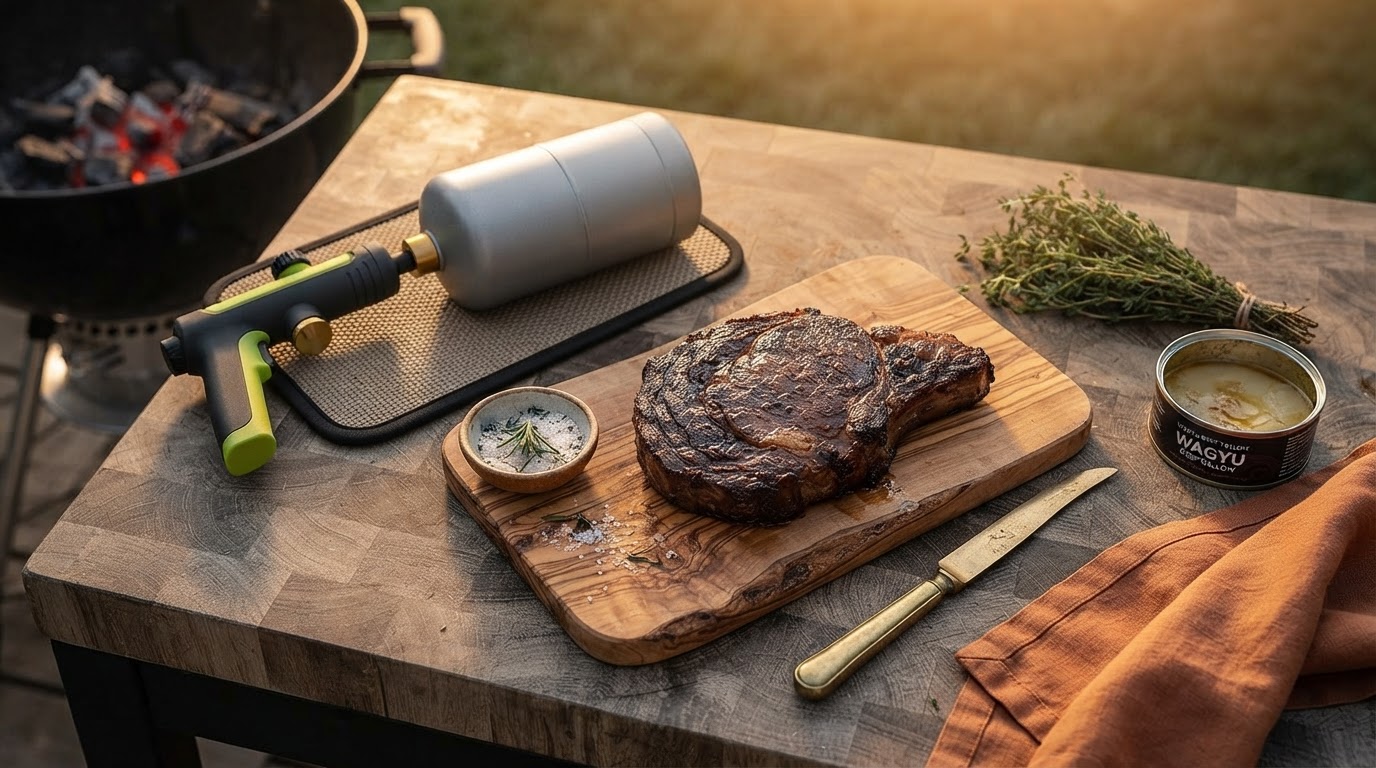
Achieving Maillard Excellence with Portable Propane Burners
 Maya ChenContributing Editor
October 1, 2026. This analysis explores the thermal requirements for achieving a professional-grade crust on proteins using portable propane systems. It is intended for culinary enthusiasts who prioritize heat density and moisture control over standard kitchen appliance limitations.
The Thermal Deficit of Indoor Searing
The conventional wisdom says that a cast-iron skillet on a residential range is the gold standard for finishing a steak. However, the physics of heat transfer suggest otherwise. Most high-end residential burners max out at 18,000 to 22,000 BTUs, a figure that sounds impressive until you factor in the evaporative cooling that occurs the moment meat hits the metal. According to Barbecuebible.com, professional-grade searing units like the SearPro can generate temperatures up to 1800 degrees by utilizing concentrated propane combustion. This level of heat is necessary because searing is not just about browning; it is about the rapid dehydration of the surface to trigger the Maillard reaction before the internal temperature rises significantly. When using a steak searing torch head, the heat is applied directly to the surface, bypassing the thermal lag inherent in pan-to-protein conduction. Furthermore, data from the Facebook group 'Standalone sear station for outdoor cooking' indicates a growing preference for single-burner propane stoves over electric alternatives due to the instantaneous heat response. Electric burners, while portable, suffer from significant recovery times that often result in steamed rather than seared meat. The goal is to reach the 1500-degree threshold identified by Big Horn Outdoor in their infrared propane grill specifications, a feat nearly impossible with standard indoor utility.
Engineering the Perfect Sear with the Adjustable Propane Cooking Flame Torch
Addressing the limitations of static burners requires a tool that manages both gas velocity and flame spread. The Adjustable Propane Cooking Flame Torch For BBQ And Outdoor Cooking functions by converting liquid propane into a high-intensity focused stream, allowing for precise heat application that a standard burner plate cannot replicate. Here's the part nobody talks about: the 'gas flavor' often associated with torches is almost always a result of incomplete combustion caused by low-quality burner heads. This specific torch utilizes an adjustable valve system to ensure a proper fuel-to-oxygen ratio, which is critical when finishing a delicate sous vide torch burner project. The adjustable nature of the flame allows the user to switch from a broad, diffuse heat for larger roasts to a needle-point blue flame for targeted fat rendering. In outdoor environments, where wind can dissipate heat from a traditional portable stove, the pressurized output of this torch maintains thermal integrity. It serves as a superior sous vide torch attachment because it doesn't rely on the ambient temperature of a cooking surface; it creates a micro-environment of extreme heat directly at the point of contact. This is especially relevant when dealing with high-moisture proteins that have undergone a water bath, where the primary objective is to flash-evaporate surface liquid. By integrating this tool into an outdoor setup, you effectively decouple the searing process from the cooking process, ensuring the interior remains at the desired temperature while the exterior achieves a 2mm crust.
A Technical Framework for Portable Propane Selection
When transitioning to a portable propane setup, the selection process must be governed by output capacity and fuel efficiency rather than aesthetics or brand name recognition. A high-output best sous vide torch must be able to sustain a constant flame without sputtering, even when the tank is inverted or low on fuel. Run the math: a standard 16.4 oz propane cylinder contains approximately 21,000 BTUs of total energy. A high-efficiency sous vide torch burner will consume this fuel at a rate that allows for approximately 30 to 45 minutes of continuous searing at peak intensity. If a burner cannot maintain a blue flame at its highest setting, it is wasting fuel and risking carbon deposits on your food. Use the following checklist to evaluate your equipment:
- Fuel Compatibility: Ensure the unit accepts standard 1lb camping propane cylinders for maximum portability.
- Ignition Reliability: Look for piezo-electric ignition systems that function in humid or breezy outdoor conditions.
- Flame Geometry: The torch should offer an adjustable nozzle to transition between a wide brush flame and a concentrated jet.
- Thermal Rating: The device must be capable of reaching at least 1500 degrees Fahrenheit to qualify as a professional searing tool.
- Safety Lock: A dedicated trigger lock is non-negotiable for extended searing sessions to prevent hand fatigue and accidental discharge.
Shop Adjustable Propane Cooking Flame Torch For BBQ And Outdoor Cooking here
Sources
- What is the best one pot burner for cooking steak and burgers?
- Which Burner Makes the BEST Steak? - YouTube
- 1500 Infrared Steak Grill, Portable Propane Gas Grill, Stainless Steel