Why Your BBQ Fire Starter Torch Fails at 'Under a Minute' Lighting
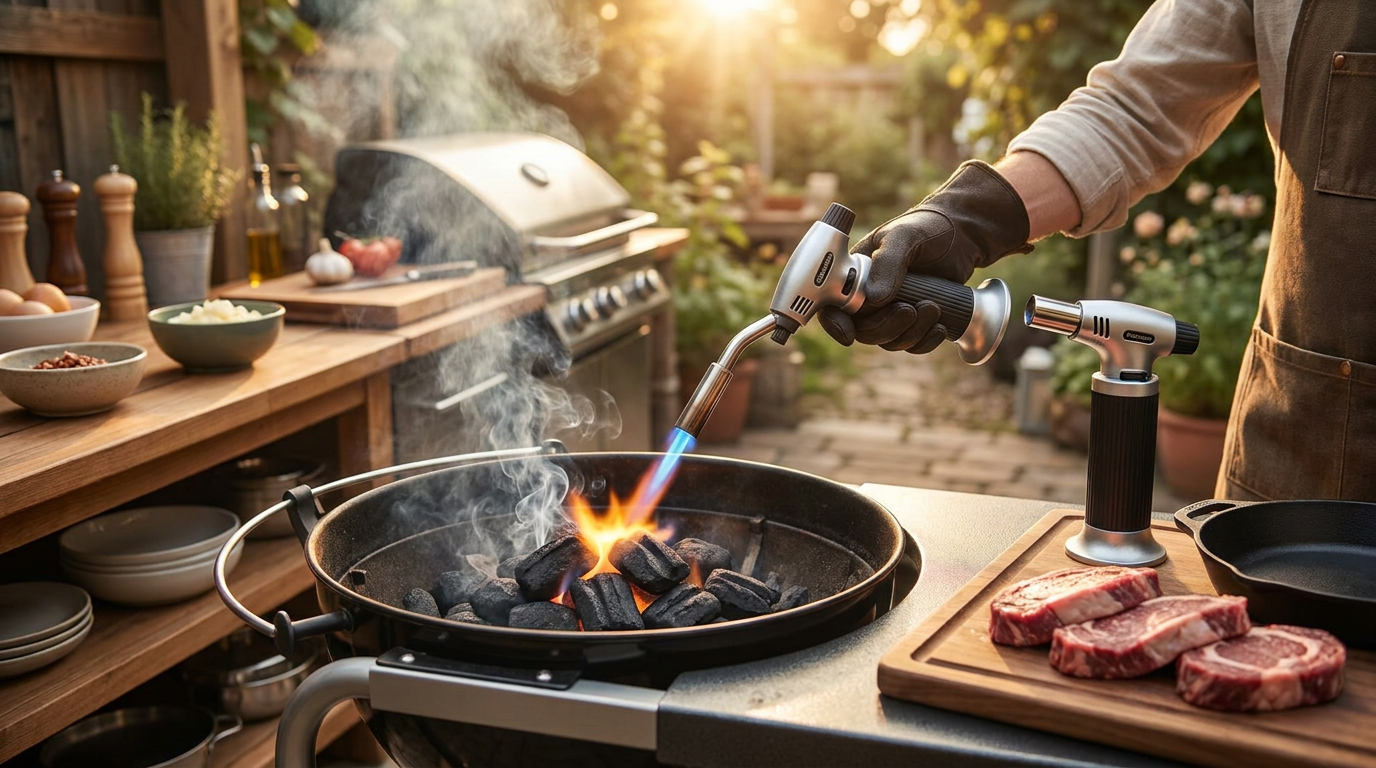
The "under a minute" promise of BBQ torches is a marketing gimmick that leads to unevenly lit charcoal and frustratingly inconsistent cooks. The conventional wisdom says a faster light is a better light, but this ignores the primary goal of starting a fire: achieving a stable, uniform heat source. Blasting a single spot on a pile of lump charcoal for 60 seconds does not accomplish this. Instead, it creates a miniature volcano of heat in one zone while the surrounding fuel remains cold, setting you up for a failed cook before the food even hits the grate.
The Problem with a Single Hot Spot
Here's the part nobody talks about: heat management begins with ignition. When a high-output torch is focused on one area, it creates a raging hot spot that can reach over 1,500°F. This core group of coals will burn out long before the heat has a chance to transfer evenly to the rest of the charcoal bed. The result is a grill with dramatic temperature gradients—one side incinerates food while the other remains underheated. This forces constant, frustrating adjustments and makes achieving a target temperature for low-and-slow smoking or even-searing nearly impossible. True BBQ fire starter torch efficiency isn't about the speed of the initial flame; it's about the quality of the resulting coal bed.
The 'Painting' Method for a Uniform Coal Bed
Photo by Gists And Thrills Studios on Pexels
A proper ignition requires a more deliberate approach. Instead of a static blast, use the torch in a slow, sweeping motion, as if you were painting the surface of the charcoal pile with fire. The goal is to create multiple, distinct points of ignition across the entire top layer. Spend 15-20 seconds on three or four different areas. These separate embers will then converge, establishing a wide, stable, and uniformly lit fire. This method, which takes about two to three minutes, aligns with guidance from charcoal manufacturers like Kingsford, who advise lighting charcoal in several places. The key is using a tool with an adjustable flame, like the Adjustable Propane Cooking Flame Torch, which allows for the control needed for this technique. Mastering this proper torch technique is fundamental to predictable results.
This controlled approach showcases the real benefits of a high-heat culinary torch: precision and versatility, not just brute force. The same control that allows for a perfectly caramelized crème brûlée is what enables a perfectly lit charcoal fire.
I'll change my mind when a torch manufacturer can demonstrate a sub-60-second light that results in a coal bed with less than a 50°F temperature variance across its surface 15 minutes after ignition. Until then, the focus on speed is a distraction from what actually matters: a consistent fire.
Why does a hot spot in charcoal ruin a BBQ?
A concentrated hot spot creates an unstable cooking environment. Food placed directly over it will burn, while food on the cooler parts of the grill will cook too slowly. This makes it impossible to manage a consistent temperature across the cooking surface, leading to unevenly cooked meat and frustrating results, especially for longer cooks like ribs or brisket.
Is a propane torch better than a charcoal chimney?
Photo by Anna Shvets on Pexels
A propane torch can be more effective than a chimney if used correctly. A chimney starter is designed to create an even fire by using convection to light the coals from the bottom up. A torch, when used with the 'painting' method described above, achieves a similar even ignition from the top down but often faster and with more control. Using a torch incorrectly by creating a single hot spot makes it inferior to a chimney. The tool's effectiveness is entirely dependent on the user's technique.