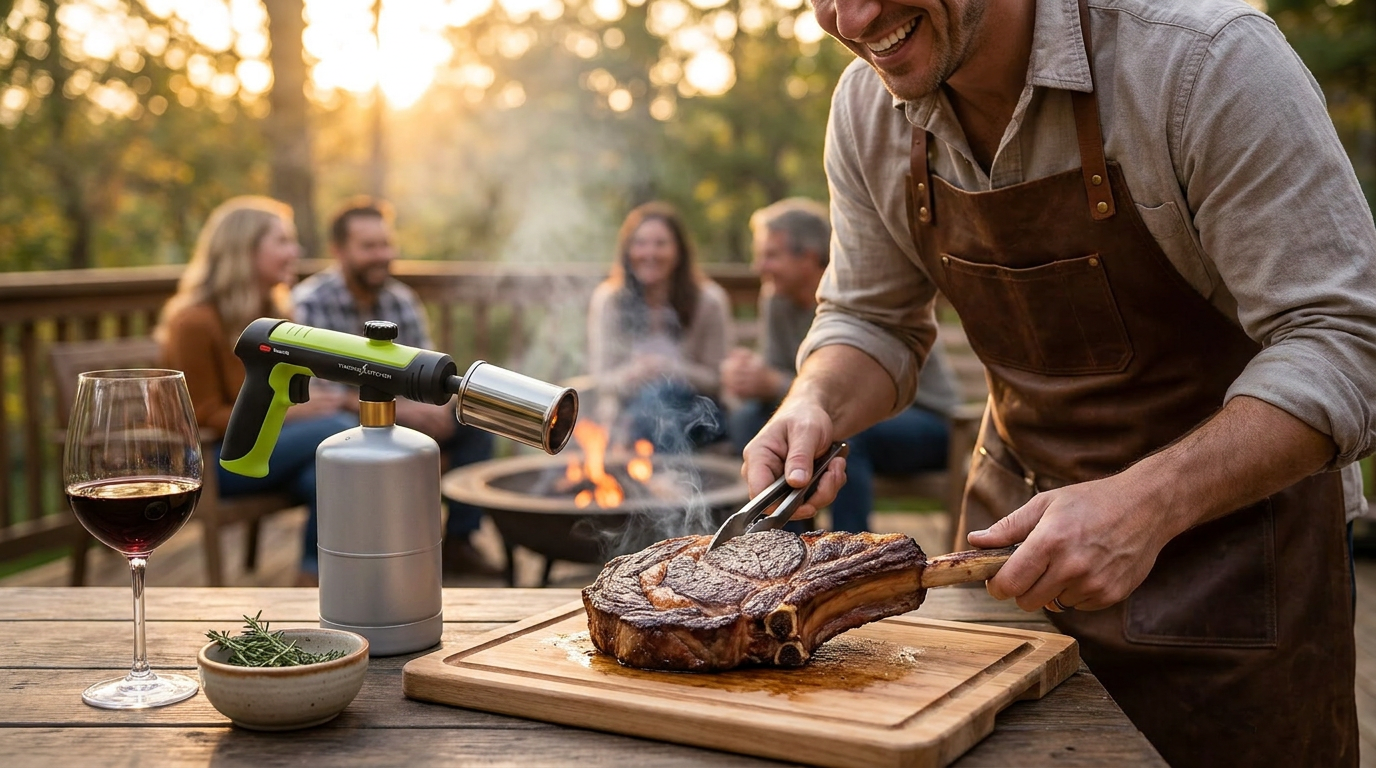
Debunking Propane Taste: A Guide to Proper Torch Technique
The 'propane taste' everyone fears isn't from the fuel itself, but from un-combusted gas hitting your food—a problem of technique, not chemistry. The conventional wisdom says to seek out special food-grade fuel or specific torches to avoid this aftertaste. This perspective misdiagnoses the issue. The off-flavor is a deposit of unburnt fuel, and it is entirely avoidable with the right method, regardless of the propane source.
The Chemistry of a Clean Burn
Propane combustion is a straightforward chemical reaction. When a propane torch operates correctly, its flame is a stable, roaring blue. This indicates complete combustion, where propane (C3H8) reacts fully with oxygen (O2). The only byproducts of this efficient reaction are carbon dioxide (CO2) and water vapor (H2O), as outlined by the U.S. Energy Information Administration. Neither of these imparts any flavor to food. The intense heat is the only thing transferred to the surface of your steak or crème brûlée, creating a perfect Maillard reaction crust without any chemical residue.
Flame Anatomy: The Source of Off-Flavors
Photo by Leo Sacchi on Pexels
Here's the part nobody talks about: a propane torch flame has distinct zones. The problem lies in the faint, light-blue inner cone visible at the nozzle's tip. This inner cone is a concentration of cooler, un-combusted, and partially combusted fuel particles. If this part of the flame makes direct contact with your food, those fuel particles will deposit onto the surface, resulting in the dreaded 'torch taste.'
The outer, darker blue part of the flame is where the real work happens. This is the hottest part of the flame, where combustion is complete. The goal of proper torch technique is to use only this outer envelope of pure heat, keeping the inner cone far from the food's surface.
A Protocol for a Flavorless Sear
Achieving a clean, flavor-free sear requires discipline, not special equipment. The process is about controlling distance and motion.
First, ignite the Adjustable Propane Cooking Flame Torch and adjust the valve until you have a strong, stable blue flame with minimal yellow or orange flickers. This ensures the torch is operating at peak combustion efficiency.
Next, maintain a distance of 3 to 5 inches between the torch nozzle and the food surface. This distance is critical. It ensures only the tip of the outer flame—the zone of pure heat—makes contact. The inner cone, with its unburnt fuel, should never touch the food.
Finally, use a continuous, sweeping motion across the food's surface. Do not hold the flame in one spot. This technique distributes the heat from the high heat culinary torch evenly, building a uniform crust without scorching or depositing any fuel residue. This same principle of maximizing heat transfer is key to improving bbq fire starter torch efficiency when lighting charcoal.
I'll change my mind when a chemical analysis can isolate a 'propane flavor' compound from food seared correctly with the tip of a fully combusted blue flame. Until then, the evidence points to user error.
Is a propane torch safe for cooking?
Photo by Gustavo Fring on Pexels
Yes, when used with the proper technique. The byproducts of complete propane combustion are harmless carbon dioxide and water vapor. Safety and flavor issues arise from incomplete combustion or allowing unburnt fuel from the flame's inner cone to contact the food. A stable blue flame and correct distancing mitigate these risks entirely.
How do I prevent the propane taste on my steak?
The 'propane taste' is a result of unburnt fuel particles landing on the meat. To prevent it, hold the torch so the inner, light-blue flame cone never touches the steak. Maintain a distance of 3-5 inches, applying heat only with the outer, darker blue part of the flame. Use a constant sweeping motion for an even, clean sear. This technique is effective whether you're finishing a steak or using a powerful bbq fire starter torch to light a grill.