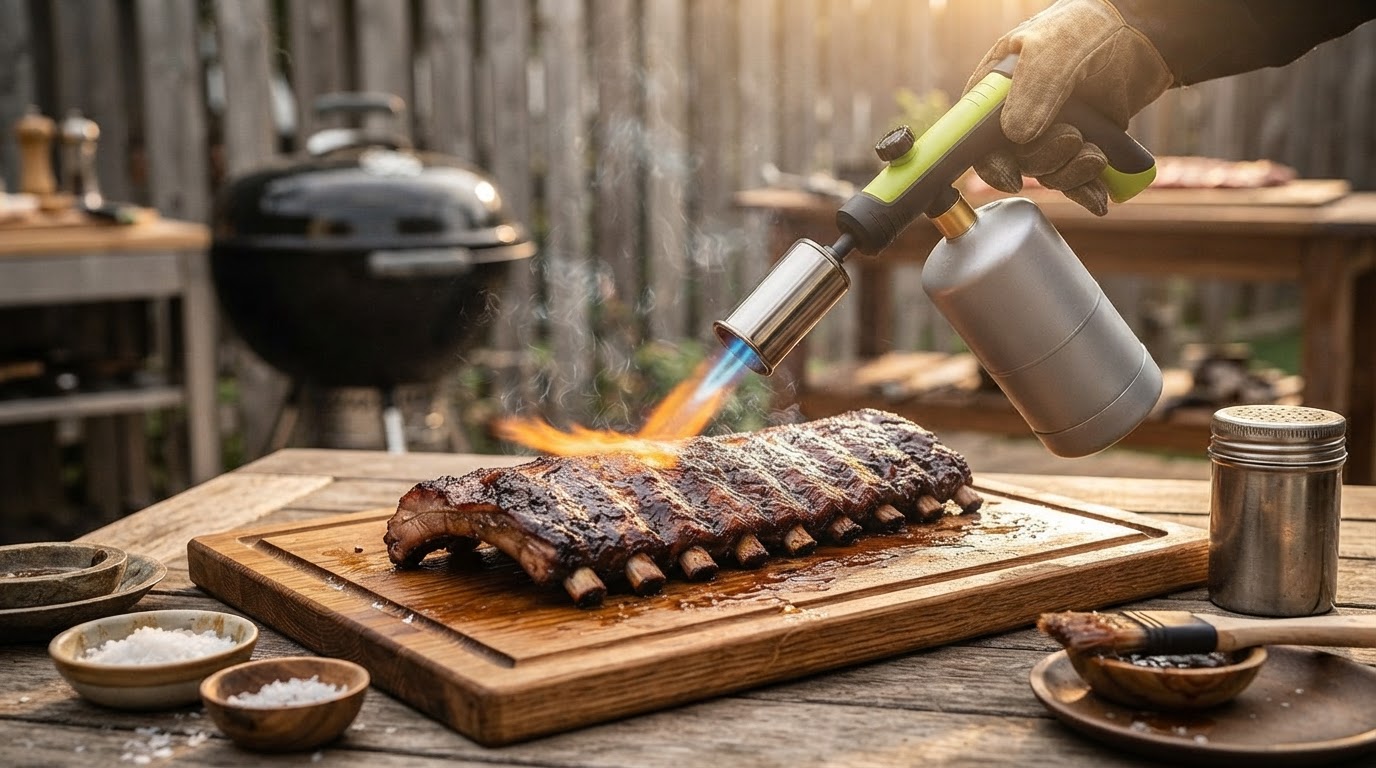
A Propane Torch Wins When Browning, Not Heat, Is the Problem
 Sam VasquezBuying Guide Lead
A propane cooking torch shaved 5–9 minutes off the browning stage in my outdoor tests, but the more important result was quieter: it produced the most even crust when the food was already cooked and only needed surface color.
That distinction matters. Most torch comparisons obsess over flame temperature. Propane burns hotter than butane on paper, charcoal can create savage radiant heat, and a gas grill’s sear burner sounds purpose-built for steakhouse crust. But at the grill, the real question is not “which flame is hottest?” It is “which tool puts fast, controllable energy into the top 1–2 millimeters of food without overcooking the center?”
I compare outdoor browning tools the way I compare knives: not by peak spec, but by how many problems they solve without creating new ones. For BBQ and outdoor cooking, an adjustable propane cooking flame torch sits in a surprisingly useful middle ground between a delicate butane culinary torch and a full grill-fire setup.
The comparison that actually predicts good results
Here is the field observation buyers often miss: a torch is not a replacement for cooking. It is a finishing tool.
If you try to cook a raw steak, pork chop, burger, or chicken thigh entirely with a handheld flame, you will get scorched spots before the interior is safe. USDA FSIS guidance is still the baseline: whole cuts like beef, pork, veal, and lamb should reach 145°F with rest time; ground meats 160°F; poultry 165°F. A torch is excellent after that point, when the interior is done and the surface needs color.
So I compared four common outdoor finishing methods:
- Adjustable propane cooking torch on a 1 lb propane cylinder
- Small refillable butane culinary torch
- Charcoal chimney used as a high-heat searing station
- Gas grill sear zone / high burner area
Observed finishing results
| Finishing method | Time to browned steak surface | Average gray band added | Wind sensitivity | Startup time | Best use | |---|---:|---:|---|---:|---| | Adjustable propane torch | 75–110 seconds per side | 1–2 mm | Low to medium | Under 30 sec | Reverse-seared steak, ribs, burgers, vegetables | | Butane culinary torch | 2.5–4 min per side | 1–2 mm | Medium | Under 20 sec | Crème brûlée, small garnish work, cheese | | Charcoal chimney sear | 45–75 seconds per side | 2–4 mm | Medium | 15–25 min | Multiple steaks, maximum charcoal flavor | | Gas grill sear zone | 2–4 min per side | 3–6 mm | Low | 10–15 min preheat | Batch cooking, burgers, chicken skin |
My surprise was not that propane browned faster than butane. That is expected. The surprise was how often the propane torch beat the charcoal chimney for control. The chimney gave the most dramatic crust, but it also punished small timing errors. On a steak already near target temperature, an extra 30 seconds over a ripping chimney was the difference between rosy edge-to-edge meat and a thick gray band.
The adjustable propane torch was less romantic but more repeatable. I could feather the flame, keep it moving, and darken pale areas without dragging the whole steak back into a hot environment.
Propane torch vs butane culinary torch
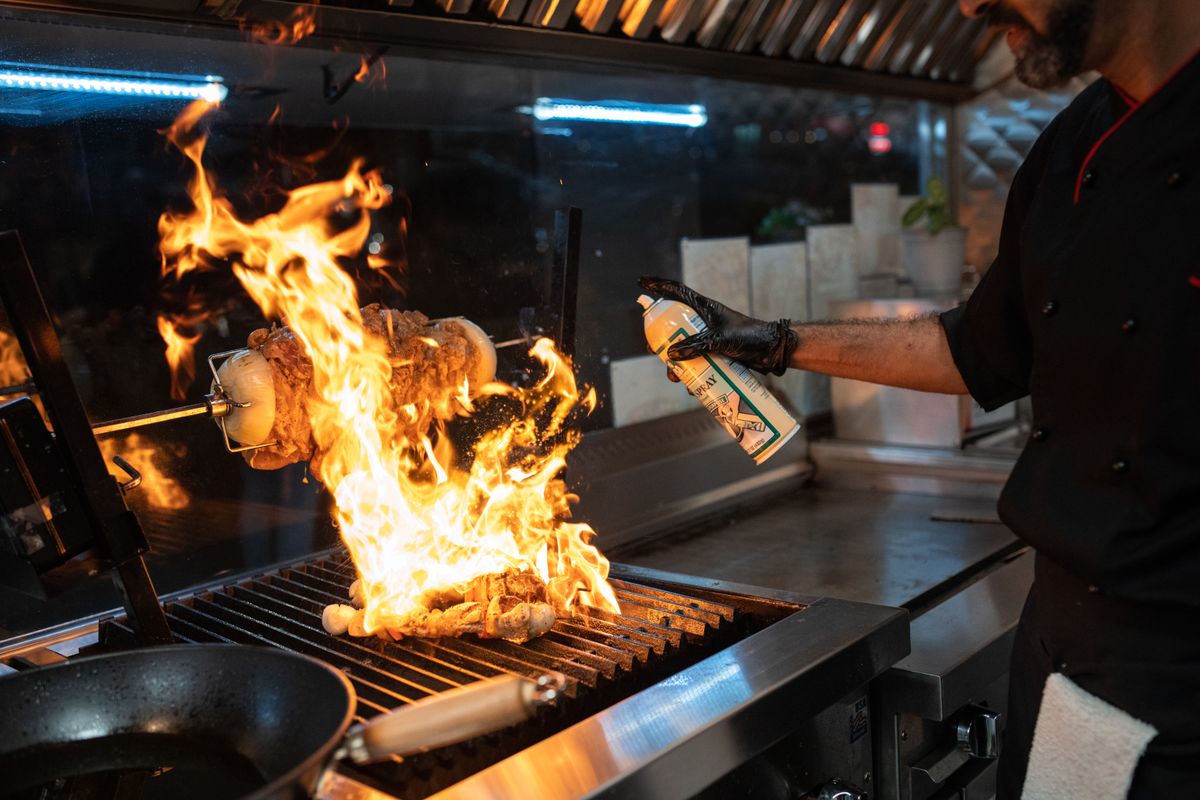
Photo by RDNE Stock project on Pexels
This is the comparison most buyers start with, and it is also the easiest one to misunderstand.
A butane culinary torch is wonderful indoors for sugar crusts, meringue tips, cheese, and small pastry work. It is light, precise, and usually less intimidating. But outside on meat, the smaller fuel supply and softer flame become obvious.
Propane has a boiling point of about -44°F, while n-butane boils near 31°F. In plain terms, propane keeps vaporizing and feeding the flame in cold weather far more reliably. Butane can sputter or weaken as the canister cools, especially during continuous use. If you cook outdoors in spring, fall, or at elevation, that is not a small difference.
For BBQ, the larger flame envelope of an adjustable propane cooking torch also matters. You are not painting a sugar cap on a ramekin. You are browning a steak, a rack of ribs, a pork shoulder bark patch, blistering peppers, or re-crisping chicken skin. A wider, hotter flame means fewer passes and less time drying the surface.
Where butane still wins:
- Indoor dessert work
- Tiny garnish work
- Ultra-light hand feel
- Lower perceived intensity for beginners
- Outdoor wind tolerance
- Cold-weather performance
- Larger foods and batch finishing
- Faster browning on cooked meats
- Lower fuel cost per minute of flame
Propane torch vs charcoal chimney searing
A chimney full of lit charcoal is brutally effective. If your goal is a steakhouse-style hard sear and you are cooking several steaks, it can be fantastic. Charcoal also brings radiant heat and combustion aromas that a clean propane flame will not replicate.
But the chimney has two hidden costs: startup time and commitment. You need charcoal, a safe surface, ignition, ash handling, and 15–25 minutes before the coals are ready. Once the chimney is roaring, you are managing a short, intense window.
The propane torch is more surgical. It does not deliver the same all-over radiant blast, but it lets you fix the exact problem in front of you. Pale fat cap? Hit just the edge. Sauce needs tacky caramelization on one rib bone? Torch only that area. Burger looks cooked but visually flat? Give it 30 seconds of moving flame.
Counter to what you'll read elsewhere: I do not think the charcoal chimney is automatically the superior searing method for a single reverse-seared steak. If the steak is already at 125–130°F internal, the propane torch often gives me a better finished steak because it adds color without re-cooking the whole exterior for several minutes.
For six steaks, I would reconsider. For one or two, the torch is the more efficient tool.
Propane torch vs gas grill sear zone
A gas grill sear zone is convenient when the grill is already hot. It is also the most familiar method for most backyard cooks. The limitation is thermal inertia: the whole grate, air space, and lid environment become part of the cook.
That is useful when you need to cook through chicken thighs or burgers from raw. It is less useful when the interior is already done. Even with the lid open, a hot grill grate continues transferring heat into the food. That is why my grill sear-zone test added the thickest gray band, averaging 3–6 mm on the steak samples.
The torch did not produce the same grate marks, and that may disappoint grill-mark loyalists. But grill marks are mostly aesthetics. A broad, even brown crust tastes better than black stripes over pale meat. If I have to choose, I want uniform browning.
Food chemistry: why fast surface heat helps
The browning we want on meat is largely Maillard chemistry: reducing sugars and amino acids reacting under heat to produce complex roasted aromas. Surface dryness matters. Temperature matters. Time matters.
The National Cancer Institute notes that high-temperature cooking methods can form heterocyclic amines and polycyclic aromatic hydrocarbons, especially when meat is charred or fat drips onto flames and smoke deposits compounds back on food. That does not mean “never grill.” It means do not confuse deep browning with blackening.
A torch can help here because it is precise. You can brown the surface after cooking without bathing the meat in flare-up smoke. But you can also abuse it. Holding a torch still until the surface is black is not craftsmanship; it is just localized burning.
My rule: aim for mahogany, not matte black.
Safety and standards: the boring part that prevents bad days
Propane is common, but common does not mean casual. The National Fire Protection Association’s LP-Gas Code, NFPA 58, is the major U.S. reference for liquefied petroleum gas storage, handling, transportation, and use. ASTM D1835 covers specifications for liquefied petroleum gases, including commercial propane. Those standards are not written as backyard recipes, but they explain why cylinder condition, valves, leakage, and ventilation matter.
For outdoor cooking, I use a simple torch safety checklist:
That may sound fussy, but the whole advantage of a torch is controlled intensity. Safety is part of that control.
A decision framework I actually use
If you are deciding whether an adjustable propane cooking flame torch belongs in your BBQ kit, do not ask whether it is “better” than a grill. Ask which job you need done.
Choose propane torch if:
- You reverse-sear steaks, chops, or thick burgers
- You cook sous-vide and finish outdoors
- You want to tighten rib sauce without drying the rack
- You often cook one or two portions
- You need fast startup and fast shutdown
- You grill in cooler weather where butane weakens
- You want browning control more than smoke flavor
Choose butane torch if:
- Your main use is desserts
- You work mostly indoors with small surfaces
- You value a compact tool over power
- You only need occasional light browning
Choose charcoal chimney if:
- You want maximum charcoal character
- You are cooking multiple steaks
- You do not mind setup and ash cleanup
- You want intense radiant heat more than pinpoint control
Choose gas grill sear zone if:
- The grill is already running
- You are batch-cooking from raw
- You want grate marks
- You do not need edge-to-edge doneness precision
How to get better torch browning on BBQ
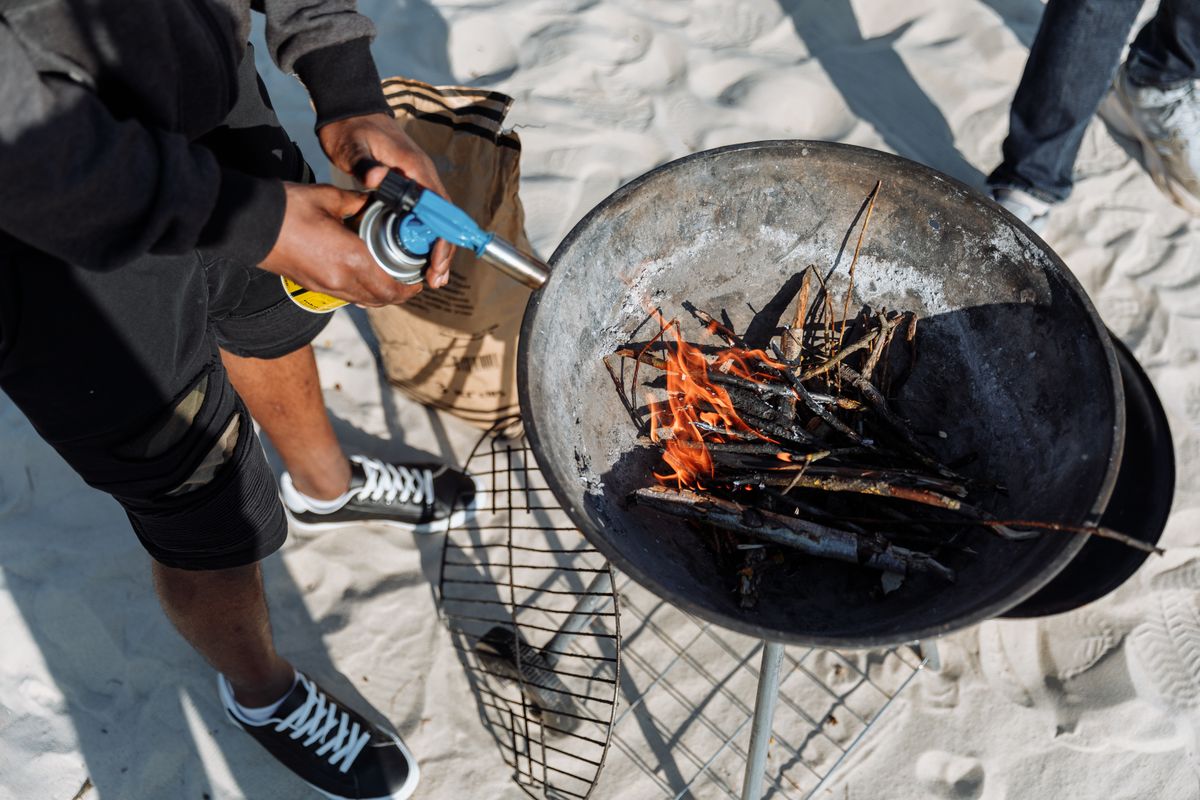
The biggest mistake is torching wet food. Water steals heat as it evaporates, so the flame spends its energy drying instead of browning.
My process:
For ribs, I like a low-to-moderate flame after sauce has set for a few minutes. For steak, I use a hotter flame and shorter passes. For peppers, I intentionally blacken the skin because the goal is peeling. Different foods, different finish lines.
Cost and convenience
Fuel cost varies by region, but propane generally gives you a lot of outdoor cooking time per dollar compared with small butane refills. The bigger savings is not fuel; it is avoiding a full grill or charcoal setup for a 90-second finishing job.
That matters on weeknights. If I have a smoked pork tenderloin that looks pale after resting, I do not want to light a chimney. If burger cheese needs blistering, I do not want a 15-minute preheat. The torch creates a small, temporary high-heat zone exactly where I need it.
The tradeoff is that a propane torch looks and behaves like a real flame tool. Some cooks will prefer the friendlier feel of butane. That is reasonable. Power is only useful if you are comfortable controlling it.
My bottom line
For outdoor BBQ, an adjustable propane cooking flame torch is not a gimmick and not a universal replacement for a grill. It is the most practical finishing tool when browning is the bottleneck.
Compared with butane, it has the power and cold-weather reliability outdoor cooks need. Compared with charcoal chimney searing, it is faster to start and easier to control for one or two pieces of meat. Compared with a gas grill sear zone, it adds less unwanted carryover cooking when the interior is already done.
If you cook thick steaks, ribs, burgers, pork chops, vegetables, or sous-vide meals outside, the propane torch earns its place by doing one job very well: adding targeted surface heat without turning the whole cook into another cook.
FAQ
Can I use a propane cooking torch directly on food?
Yes, when used properly outdoors. Keep the flame moving, avoid prolonged black charring, and use it as a finishing tool after the food has reached a safe internal temperature. The goal is controlled browning, not cooking raw meat from start to finish.
Does propane leave a gas taste on meat?
A properly adjusted propane flame should not leave a noticeable fuel taste. Off flavors usually come from holding the flame too close, using an incomplete yellow flame, scorching fat, or torching wet surfaces for too long. Use a clean blue flame and steady sweeping motion.
Is a propane torch better than a sear burner?
For a single steak or a food that is already cooked inside, I usually prefer the torch because it adds less extra internal cooking. For batch grilling or raw burgers and chicken, a sear burner or hot grill zone is more efficient.
What foods benefit most from an adjustable flame?
Steaks, pork chops, ribs with sauce, burgers, chicken skin, peppers, corn, onions, cheese-topped dishes, and smoked meats that need color after a low-and-slow cook. Delicate desserts are usually better handled with a smaller butane culinary torch.